

E-commerce Shop Management: Real-World Challenges and Smarter Solutions
 Scrolling TikTok or Instagram, you might think running an e-commerce shop is a ticket to easy money—just launch a store, post a few products, and watch the sales roll in. But for solo entrepreneurs and small teams, the reality is more complex and hands-on. Behind every “overnight success” is someone juggling inventory, marketing, customer service, and the pressure to keep every customer happy—all while watching costs like a hawk.
With global e-commerce sales projected to reach $8.1 trillion by 2026, opportunity abounds—but so do the challenges. Let’s break down what really goes on behind the scenes and how tools like Chatalyst can give small shops a fighting chance.
 What E-commerce Shop Owners Actually Face
Running an e-commerce shop isn’t just about selling—it’s a daily balancing act of competing priorities. Here’s what small teams and solo founders are up against:
- Inventory Management: Staying updated on stock, avoiding overselling, and keeping listings accurate is a constant struggle. 20% of small businesses say inventory is their top headache.
- Order Fulfillment: Processing, shipping, and returns can easily drain time and energy. Mishandled returns? Affects 25% of online retailers and damages trust.
- Marketing and SEO: You can’t just “build it and they’ll come.” 43% of e-commerce traffic still comes from organic Google searches, so SEO and consistent marketing matter.
- Customer Service: The biggest sinkhole for time and resources. 73% of shoppers say customer experience affects their buying decisions, yet 45% of small shops can’t support 24/7 help.
The truth: Most shoppers expect lightning-fast, personalized answers—60% want responses in 10 minutes or less. For small teams, keeping up is tough and burnout is real.
The Cost Crunch: Why Customer Service Is So Expensive
Every dollar matters in a small business. Overspending on operations—especially customer service—can quickly eat into profits that could be spent on growth. Here’s a quick reality check:
- In-store staff: Hiring physical retail staff in the U.S. costs $16–$18 per hour, or $34,000+ per year—plus training and benefits.
- Remote agents: Outsourcing online reps ($12–$25/hour) multiplies costs if you want true 24/7 coverage—easily reaching $50,000+ a year for even a small team.
- AI chatbots: A well-designed chatbot works 24/7 for a fraction of the cost. Businesses save up to 30% on service expenses with AI.
But is saving money enough? Not if customer satisfaction drops. The best solutions blend cost savings with a great experience.
Humans vs. AI: Who Delivers for Today’s Customers?
Let’s be honest—human agents bring empathy, but they’re slow for simple questions. Here’s what the data says:

- Humans: 81% of customers still want a human for complex issues. But average response times are 4–5 minutes—even for basic requests.
- AI Chatbots: Perfect for routine questions (order tracking, FAQs, product info). 85% of simple queries can be resolved instantly by AI, and they’re three times faster than humans.
- Hybrid = Gold Standard: Live chat with both AI and human backup achieves a 92% satisfaction rate.
Key takeaway: The winning formula is AI for routine tasks, humans for the hard stuff.
Why Chatalyst Is a Game Changer for Small E-commerce Teams
Chatalyst isn’t just another chatbot. Built by former Shopify sellers, it’s designed specifically to help small shops punch above their weight:
- Proactive Sales Assistant: Chatalyst tracks browsing and cart activity, then nudges shoppers at the right moment—driving up average order value and reducing abandoned carts. Some stores see a 28% increase in checkout value and 30% lower abandonment.
- Inventory Smarts: Unlike generic bots, Chatalyst checks live stock before suggesting products—critical, since 68% of shoppers won’t return after an out-of-stock mishap.
- Smooth Handover: When things get tricky, Chatalyst seamlessly escalates chats to a human, maintaining a higher satisfaction rate during transitions.
- Affordable for Small Shops: With plans starting below most competitors (like Tidio’s $19.99+), Chatalyst is budget-friendly without cutting corners.
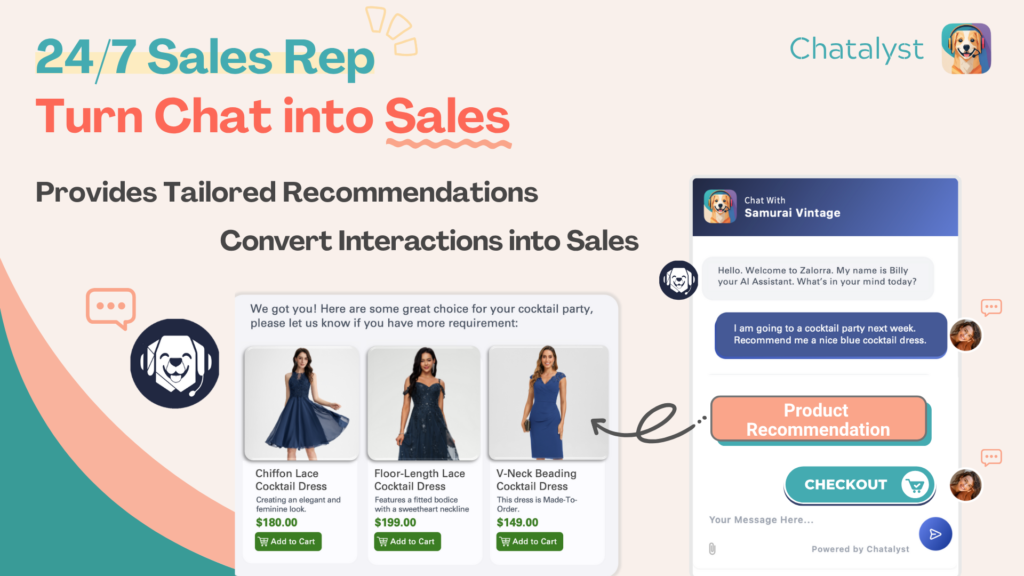
How Does Chatalyst Compare?
- Rep AI: Excellent for larger brands, handles 97% of tickets, but comes with a higher price tag and complexity.
- SmartBot: Shopify-integrated, good for basic support, but lacks Chatalyst’s sales-driven features.
- Tidio: Popular with small businesses and offers live chat, but doesn’t match Chatalyst’s deep inventory and sales automation.
Chatalyst’s focus on Shopify, proactive sales, and easy setup make it a standout for lean teams.
The Future: AI-Powered, Human-Backed Service
Where is customer service headed? Toward a smart hybrid. By 2030, AI chatbots will handle 80% of customer interactions, freeing up humans for high-value, complex cases. AI-driven personalization already boosts retention rates by up to 15%, and 95% of companies plan to keep or grow their AI investment in customer service.
For small businesses, this means lower costs, less stress, and happier customers—without sacrificing the personal touch.
Conclusion: A Smarter Way to Run Your Shop
E-commerce success takes more than a pretty website. With over 20 million e-commerce sites competing globally, efficiency and customer experience are everything. Traditional customer service can drain your wallet or your willpower. Chatalyst offers a new path: affordable, proactive, and inventory-aware support that works for you around the clock.
It’s not “one click to riches”—you’ll still need to tweak and monitor. But in a world where 54% of shoppers expect personalized offers and quick answers, Chatalyst is the edge that helps small shops compete—and win.
